
Salt & Stone: Why Grounded Brands Win in an Anxious Wellness Market
A case study in stability, embodiment, and meaning reframing
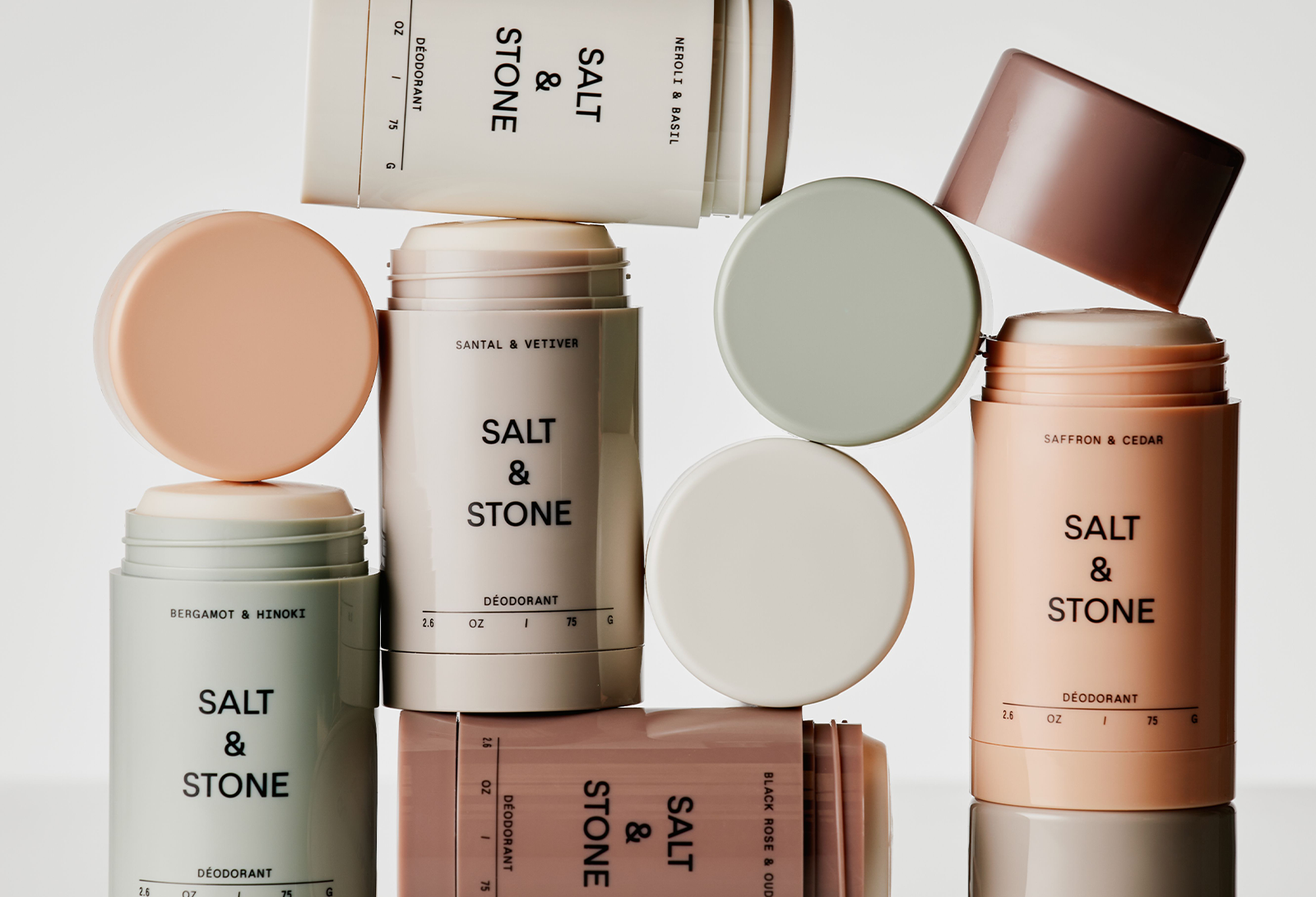
Image Courtesy: BeautyMatter
Introduction: Clean Was Loud — Salt & Stone Was Quiet
By the time Salt & Stone entered body care, the category was already saturated.
Aluminum-free deodorants weren’t novel.
“Clean” formulations weren’t differentiated.
Ingredient fear had been thoroughly communicated.
Functionally, Salt & Stone was late.
Emotionally, it arrived at the exact right moment.
Rather than amplifying concern about what the body absorbs, Salt & Stone reframed the question entirely:
What if care didn’t need vigilance at all?
This Salt & Stone brand case study explores how the brand succeeded not by educating consumers more — but by removing anxiety from the daily act of care.
The Failure of Early Clean Brands: Fear Without Resolution
Most early natural deodorant brands shared the same narrative structure:
Conventional deodorant is dangerous
The body is under threat
Switching products is an ethical act
While well-intentioned, this framing produced three psychological costs:
Chronic vigilance — consumers felt responsible for monitoring risk daily
Identity pressure — using the product meant adopting a moral position
Aesthetic compromise — products often looked apologetic or utilitarian
The category trained consumers to feel good only when being careful — which is emotionally unsustainable for something used every day.
Salt & Stone did something rare.
It opted out.
A Different Emotional Contract: Resilience, Not Risk
Salt & Stone does not define the body as fragile.
It defines it as exposed — to heat, sweat, movement, friction, environment.
This distinction matters.
Instead of protecting the body from imagined threats, the brand frames care as maintenance under real conditions.
No panic.
No alarm.
No lists of what to avoid.
Just durability.
From a psychological standpoint, Salt & Stone shifts body care from threat mitigation to environmental readiness.
That reframing changes everything.

Image Courtesy: WWD
Founder Context: Equipment, Not Ideology
Salt & Stone was founded by Nima Jalali, a former professional snowboarder whose experience came not from wellness culture but from constant physical exposure — sun, cold, sweat, salt, friction.
That origin matters because it shaped the brand’s logic.
Jalali didn’t translate fear into product.
He translated use.
Care, in this system, isn’t preventive virtue. It’s something that needs to hold up under pressure.
Importantly, Salt & Stone does not center its founder narratively. His worldview is absorbed into materials, formulations, and tone — not storytelling.
The result is a brand that feels more like equipment than identity.
Design as Proof of Stability
Salt & Stone’s design doesn’t decorate the product. It anchors it.
muted palettes
heavy packaging
matte finishes
minimal typography
These choices signal permanence.
In consumer psychology, weight, resistance, and restraint communicate trust because they imply:
longevity
seriousness
non-trend dependence
Salt & Stone looks like it belongs wherever the body moves — beach, gym, travel, bathroom — not just on a shelf or feed.
Design here is not aesthetic pressure.
It is physical reassurance.
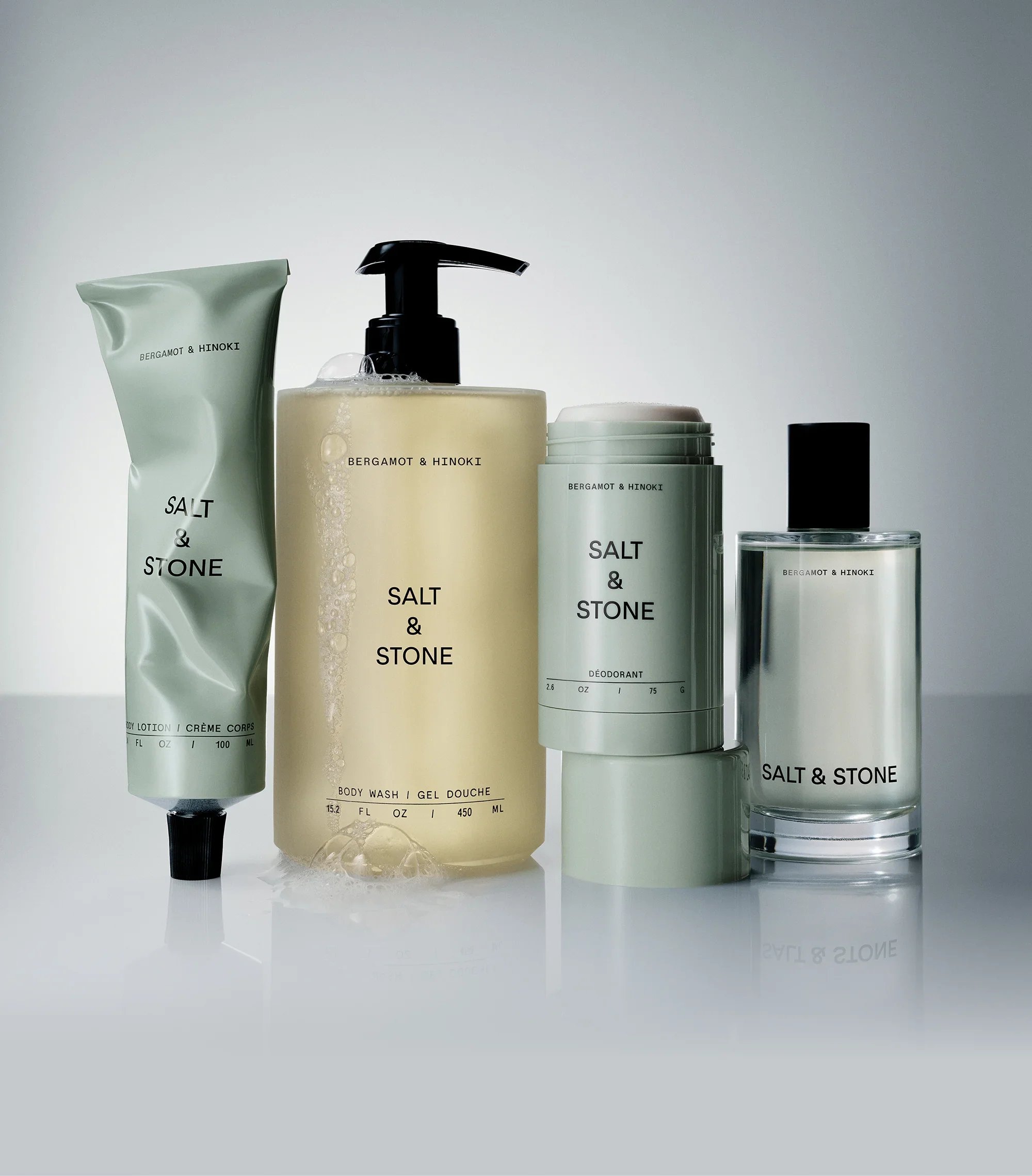
Image Courtesy: SaltandStone
Why Salt & Stone Didn’t Need a “Suspicious List”
This is where Salt & Stone diverges most clearly from brands like Drunk Elephant.
Drunk Elephant used fear strategically — but critically, it bounded that fear through the “Suspicious 6,” offering resolution through knowledge.
Salt & Stone rejected that model entirely.
Why?
Because its emotional job wasn’t control — it was grounding.
Where Drunk Elephant calms anxiety by structuring vigilance, Salt & Stone calms it by removing cognitive demand altogether.
The body isn’t something to monitor.
It’s something to trust.
The brand succeeds because it never activates the nervous system in the first place.
Scent and Texture as Regulators, Not Stimuli
Salt & Stone’s fragrances do not perform emotional highs.
Notes like vetiver, eucalyptus, santal, and bergamot stay spatial, close to the skin, and restrained.
In sensory psychology, such scents:
reduce mental chatter
encourage presence
feel stabilizing rather than expressive
The product doesn’t energize or soothe dramatically.
It holds the baseline.
This is care designed to disappear into routine — which is precisely why it sticks.
Why Salt & Stone Scaled When Others Didn’t
Salt & Stone made aluminum-free feel inevitable rather than ideological.
It succeeded because:
it removed fear from the equation
it avoided moralizing the user
it invested in brand world, not escalation of claims
it allowed consumers to choose better care without adopting a new identity
That neutrality is its power.
In a culture saturated with messages about being better, Salt & Stone simply asked consumers to be steady.
Strategic Takeaways for Brand Builders
Salt & Stone reveals several truths worth internalizing:
Fear works only when tightly bounded — and often not at all in daily rituals
Products used every day must reduce, not increase, cognitive load
Embodied trust can outperform educational persuasion
Founder influence can be absorbed without founder visibility
Calm is a competitive advantage in anxious categories
Sometimes what differentiates a brand isn’t what it argues — but what it refuses to activate.
Conclusion: Care That Doesn’t Ask Questions
Salt & Stone didn’t win because it was cleaner.
It won because it made caring for the body feel non-negotiable, non-performative, and non-stressful.
In a market that taught consumers to think harder about their bodies, Salt & Stone let them stop thinking — and start trusting again.
It’s not a brand about purity.
It’s a brand about remaining intact.
And in today’s wellness landscape, that may be the most radical position of all.
Essential Reads: Understanding Grounded Trust
1. Risk Society — Ulrich Beck
Why it matters: Explains why modern consumers seek relief from constant risk assessment.
2. The Body Keeps the Score — Bessel van der Kolk
Why it matters: Grounding and safety are somatic, not cognitive.
3. Sensuous Scholarship — Paul Stoller
Why it matters: Illuminates how sensory experience builds meaning and belief.
4. Brand Seduction — Daryl Weber
Why it matters: Shows how material cues shape subconscious trust.
5. Ways of Seeing — John Berger
Why it matters: Offers insight into how material restraint alters perception.
