
Drunk Elephant vs Tatcha: Two Ways of Caring for the Same Fear
A psychological and anthropological contrast in modern self-care
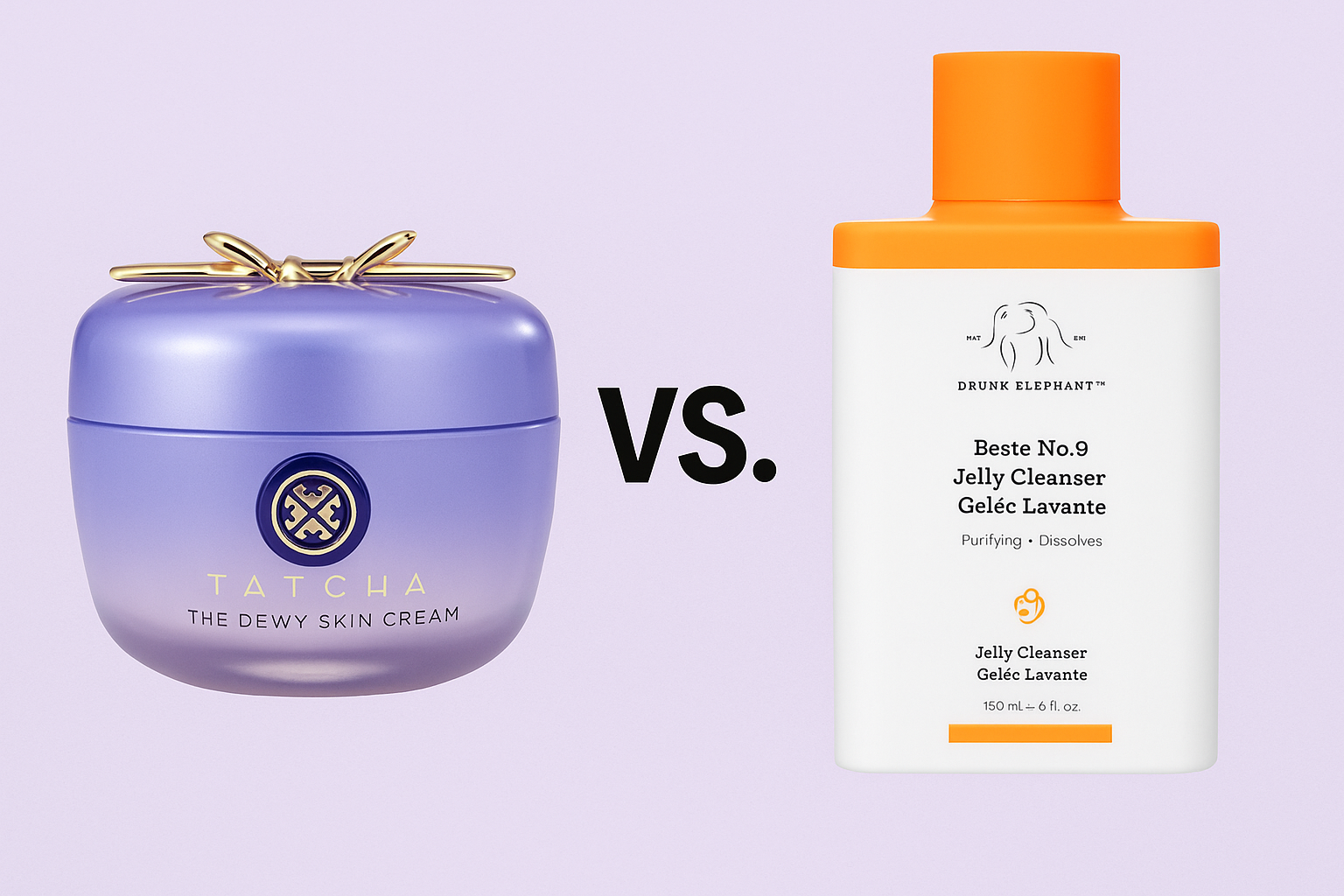
Introduction: The Anxiety Came First
Before either brand existed, the anxiety did.
Modern consumers did not wake up one day wanting serums, rituals, or ingredient philosophies. They woke up feeling uncertain inside their own bodies — unsure what was safe, unsure who to trust, unsure where responsibility lay.
Wellness culture did not create this anxiety.
It inherited it.
Drunk Elephant and Tatcha emerged as responses to the same underlying condition: bodily uncertainty in a culture obsessed with optimization. But where they diverge — radically — is in what they believe care should look like once fear is present.
This is not a comparison of products or performance.
It is a contrast between two belief systems about the human body.
One Fear, Two Philosophies of Care
At their core, both brands answer the same question:
What should a person do when they feel their body is at risk?
Their answers could not be more different.
Drunk Elephant responds with control.
Tatcha responds with discipline.
Both are forms of care.
Both are emotionally valid.
Neither is neutral.
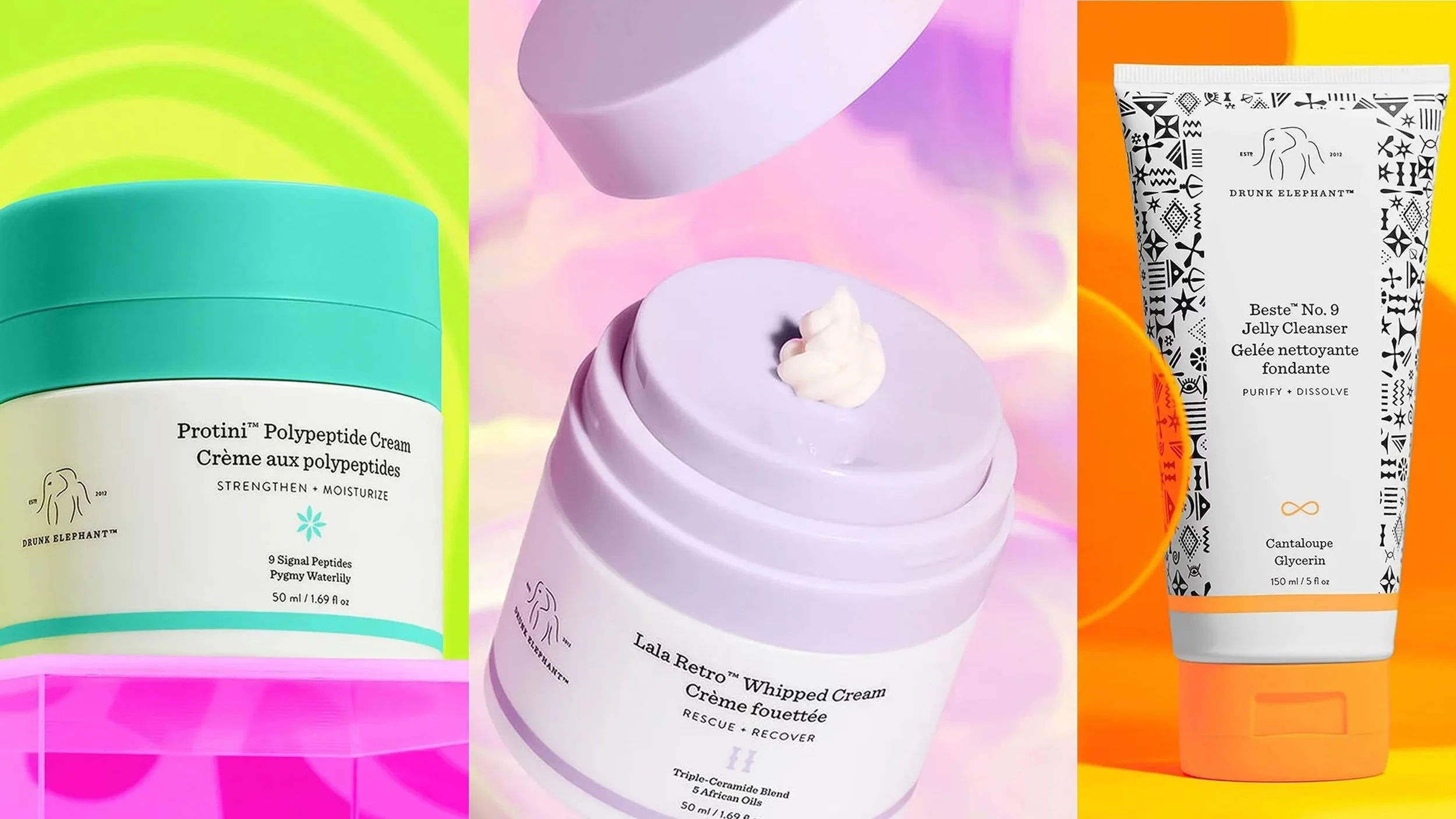
Image Courtesy: ABC News
Drunk Elephant: Care as Control
Drunk Elephant begins from the assumption that the body is exposed.
Harmed by hidden ingredients.
Overwhelmed by misinformation.
Failed by institutions that once promised safety.
In this worldview, care is inseparable from vigilance.
The brand’s defining contribution — the “Suspicious 6” — did something psychologically powerful: it made danger listable. Finite. Comprehensible. Suddenly, fear had boundaries.
This is classic risk-management behavior. Anxiety does not disappear; it becomes manageable through rules.
Drunk Elephant doesn’t ask consumers to trust a system.
It asks them to become the system.
Mix your products.
Read the labels.
Stay alert.
Care here is active, cognitive, and ongoing. Relief comes not from surrender, but from competence.

Image Courtesy: Business Insider
Tatcha: Care as Discipline
Tatcha begins from a very different assumption: that the body is not fragile by default — but destabilized by impatience.
Its philosophy was shaped through translation, not invention. Founder Victoria Tsai, encountering Japanese beauty practices during a period of physical and emotional depletion, did not find urgency or correction. She found maintenance.
Care, in this system, is not about detecting threats.
It is about repeating what sustains.
Ritual matters not because it is beautiful, but because it creates rhythm. Discipline is not restrictive; it is stabilizing.
Tatcha does not educate consumers into alertness.
It asks them to wait.
Trust builds over time.
Results are cumulative.
The body is allowed to adapt.
Care here is slow, embodied, and longitudinal.
Time as the Hidden Differentiator
The deepest contrast between these brands is not ingredient philosophy — it is time orientation.
Drunk Elephant compresses time.
Safety should be immediate. Clarity should be instant. If harm exists, remove it now.Tatcha expands time.
Care unfolds slowly. Trust accrues through continuity. The body learns through repetition.
Time is not a backdrop.
It is a design choice.
Each brand teaches customers how long care should take — and what kind of patience (or urgency) is appropriate.
Founder Authority: Defense vs Translation
Both brands are founder-led, but the nature of authority differs fundamentally.
Tiffany Masterson (Drunk Elephant) derives authority from personal harm. Her stance is protective, defensive, and corrective. She does not claim expertise through tradition, but through lived exposure.
Victoria Tsai (Tatcha) derives authority through humility. She positions herself as a translator of a system older and more disciplined than herself — one she learned from by slowing down.
One founder says: I discovered what to avoid.
The other says: I learned what to repeat.
Neither is more authentic.
But they encode different relationships to fear.
Design as Psychological Instruction
Design, in both brands, teaches the nervous system what to do.
Drunk Elephant’s bright colors, bold typography, and category differentiation function as signals of alertness. The shelf presence says: pay attention.
Tatcha’s muted palettes, ceremonial packaging, and visual restraint create pause. The design says: slow down.
This is not aesthetic preference.
It is nervous-system choreography.
One design activates.
The other regulates.
What Each Brand Asks of the Consumer
This is where the contrast becomes personal.
Drunk Elephant asks you to:
Learn continuously
Monitor actively
Make frequent decisions
Carry responsibility
Tatcha asks you to:
Commit
Repeat
Trust process
Relinquish immediacy
Both demand effort.
But of entirely different kinds.
One rewards mastery.
The other rewards patience.
The Uncomfortable Truth
Here is the tension neither brand can escape:
Control empowers — but transfers burden to the individual.
Discipline calms — but requires surrender to time.
Neither path is purely liberating.
Drunk Elephant offers relief without rest.
Tatcha offers calm without guarantees.
The success of both brands reveals something deeper about modern wellness culture: there is no singular way to feel safe in one’s body anymore.
Why Both Brands Succeeded
They succeeded because they were coherent.
They did not blend philosophies.
They did not hedge their beliefs.
They did not try to soothe and activate simultaneously.
Each brand respected the psychology it invoked.
That clarity — even when divisive — builds trust.
Conclusion: Care Is Never Just Product
Drunk Elephant and Tatcha are not selling skincare.
They are selling frameworks for managing uncertainty.
One says: Stay informed. Stay in control.
The other says: Slow down. Stay consistent.
Neither answer the fear completely.
But each gives it form.
And in a culture where bodies feel increasingly unstable, form — not perfection — is often what people are really buying.
