
Tatcha: When Ritual Was Translated, Not Marketed
A cultural case study in discipline, reverence, and quiet authority

Image Courtesy: Sephora
Introduction: Most Rituals Are Stripped Before They Are Sold
Western wellness brands love the idea of ritual.
Few respect the requirements of translating one.
Ritual is not repetition.
It is not aesthetic.
It is not mood.
Ritual is discipline sustained across time.
Most brands extract the look of ritual while discarding its demands. They flatten meaning for accessibility. They turn practice into performance.
Tatcha is rare because it did not extract.
It translated.
This Tatcha case study explores how founder Victoria Tsai preserved the discipline of Japanese beauty rituals while making them legible to a Western consumer—and why that restraint built a brand capable of longevity, trust, and eventual acquisition.
Victoria Tsai and the Conditions That Shape Ritual
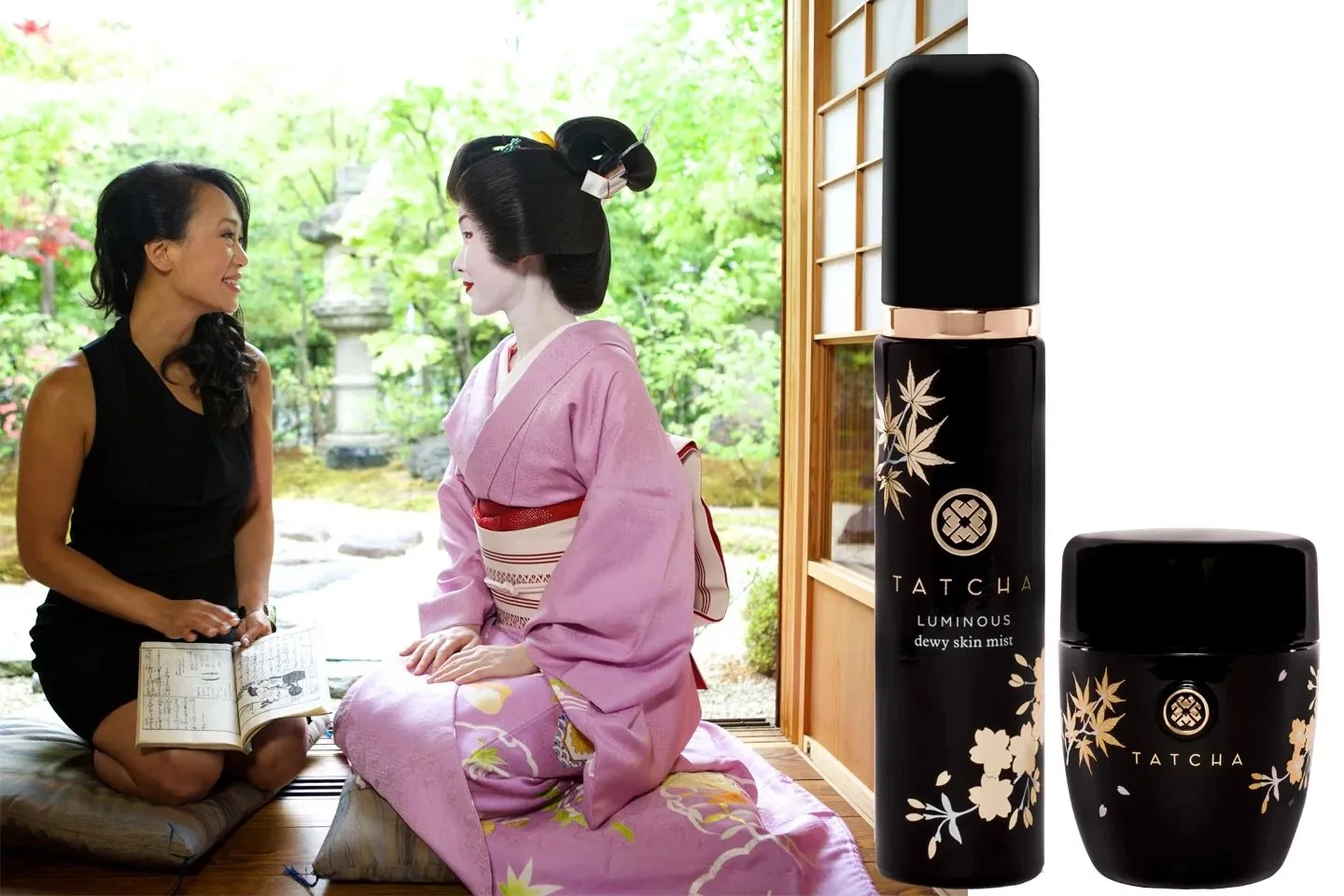
Image Courtesy: Vanity Fair
Tatcha did not begin as a brand exercise.
It began as a condition of necessity.
After losing her job and returning to her parents’ home, Victoria Tsai found herself physically compromised and emotionally depleted. Recovery did not come through acceleration or reinvention. It came through deceleration.
During a trip to Japan, Tsai encountered a philosophy of beauty rooted not in correction, but maintenance. Care was slow, cumulative, and disciplined. Skin was not treated as a problem to solve, but as something to tend to over time.
This distinction matters.
Tatcha was not born out of ambition.
It was born out of a relearning — how to care for the body without urgency, and without extraction.
That origin shaped the brand’s cadence, its restraint, and its refusal to over-promise. The brand’s discipline is not aesthetic. It is autobiographical.
From Appropriation to Translation
Japanese beauty culture is often aestheticized in Western markets—reduced to textures, ingredients, and minimalism.
Tatcha avoided this trap by translating structure, not surface.
Practices like:
gentle exfoliation instead of aggressive correction
layering instead of stripping
prevention over urgency
were presented not as exotic discoveries, but as systems of care with internal logic.
Anthropologically, this matters because rituals lose meaning when detached from discipline. Tatcha preserved rhythm. It preserved sequence. It preserved restraint.
Nothing was rushed.
Nothing was optimized for trend.
That is why it felt credible.
Discipline as Brand Signal
Tatcha’s most powerful brand signal is not luxury.
It is self-restraint.
Product launches are paced deliberately. Formulations evolve slowly. Claims are measured. Language is calm.
This communicates something subtle but important:
This brand is not reacting.
It is maintaining.
In cultural terms, maintenance signals authority. Only systems that expect to endure behave this way.
Tatcha does not sell urgency.
It sells continuity.

Image Courtesy: WWD
Design That Refuses Noise
Tatcha’s visual identity is refined but never loud.
The color story draws from classical Japanese palettes without mimicry. Typography is elegant but non-dominant. Packaging feels ceremonial, not promotional.
Design here functions as framing, not expression.
It creates the psychological cue:
Slow down. Pay attention. Proceed with care.
In a market crowded with stimulation, Tatcha used withdrawal as signal.
Silence became luxury.
Ritual Without Intimacy Extraction
A critical risk in ritual-based branding is emotional extraction—asking consumers to invest meaning without structural return.
Tatcha avoids this by positioning ritual as private discipline, not communal performance.
There is no pressure to share.
No accelerated “transformational journey.”
No before-and-after theater.
The ritual belongs to the user — not the brand.
That boundary preserves trust.
The Acquisition Was Not the Point — But It Was the Proof
When Tatcha was acquired by Unilever, it signaled something important.
Not that heritage could be scaled — but that discipline could be protected.
Tatcha was acquired because it had structure.
Because it was coherent.
Because it could be stewarded without dilution.
That kind of acquisition is not predatory.
It is curatorial.
And only brands built on restraint earn it.
Strategic Takeaways for Brand Builders
Tatcha teaches lessons that are uncomfortable in modern marketing:
Ritual cannot be rushed
Heritage must be translated, not aestheticized
Discipline communicates authority more than aspiration
Silence can outperform stimulation
Longevity attracts capital more reliably than hype
Tatcha did not build desire by escalating promise.
It built trust by lowering volume.
Conclusion: The Brands That Endure Are the Ones That Withstand Speed
Tatcha’s success lies not in storytelling, but in structure that resists acceleration.
It proves that beauty brands do not need to shout to scale — but they must know when not to move.
In a market addicted to momentum, Tatcha stood still long enough to be believed.
That is not nostalgia.
It is discipline, translated correctly.
Essential Reads: Understanding Tatcha’s Ritual Intelligence
1. The Book of Tea — Kakuzō Okakura
Why: Explains ritual, beauty, and discipline as systems of attention — foundational to Tatcha’s philosophy.
2. The Practice of Everyday Life — Michel de Certeau
Why: Frames ritual as lived practice, not symbolic consumption.
3. In Praise of Shadows — Jun'ichirō Tanizaki
Why: Illuminates the cultural value of restraint, subtlety, and quiet authority in Japanese aesthetics.
4. How Brands Grow — Byron Sharp
Why: Explains why consistency and mental availability, not constant novelty, sustain growth.
5. Zen and the Art of Maintenance — Matthew B. Crawford
Why: Reinforces the power of care, repetition, and discipline over optimization.
