
Drunk Elephant: When Control Became the Language of Care
A cultural case study in fear, agency, and modern wellness psychology
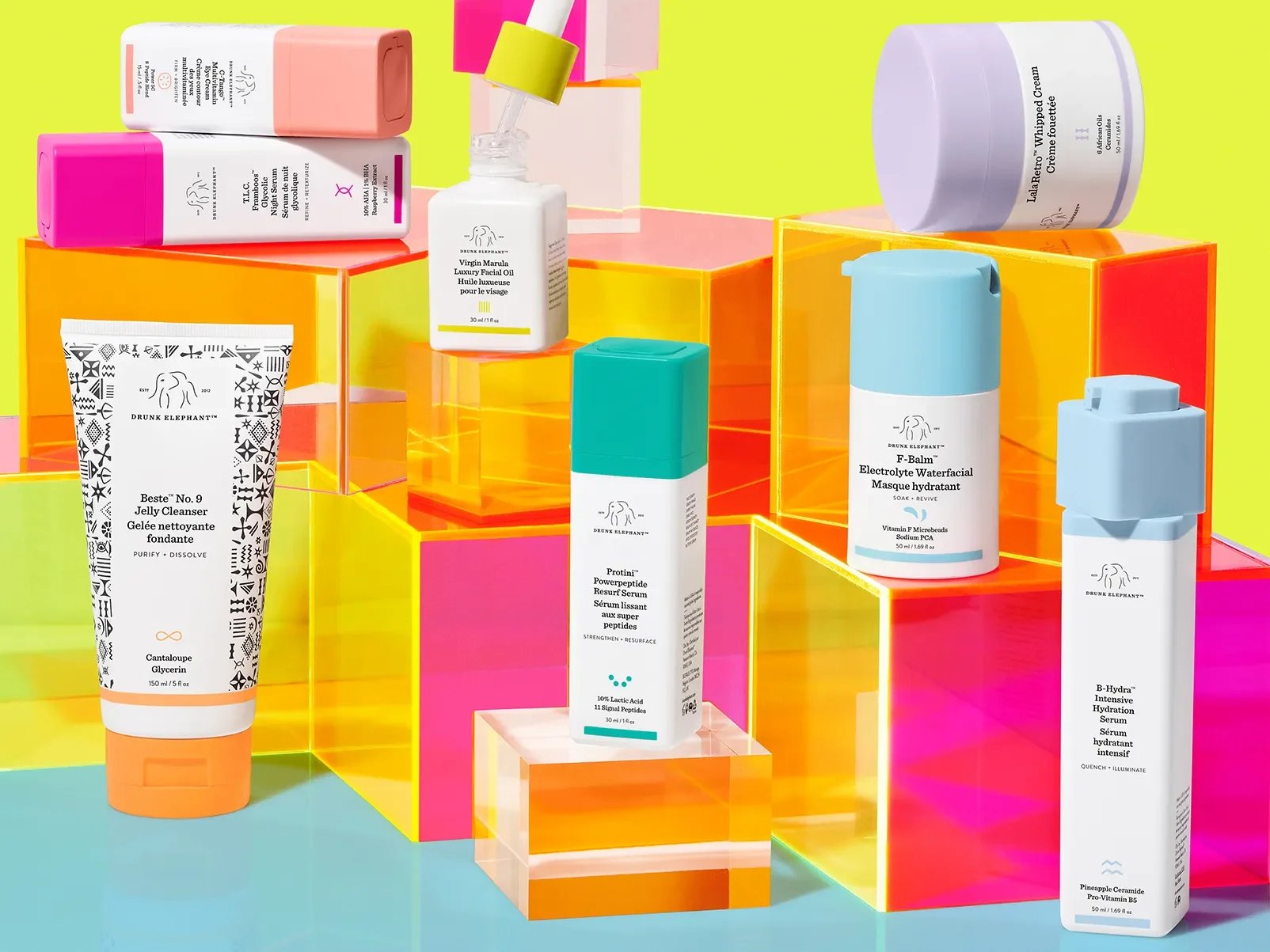
Image Courtesy: Allure
Introduction: Clean Beauty Didn’t Calm People Down — It Activated Them
Drunk Elephant didn’t enter the beauty market to soothe.
It entered at a moment when consumers no longer trusted skincare, brands, or institutions to keep them safe. Ingredient literacy was rising alongside misinformation. Every label became a threat map. Every reaction carried moral weight.
The beauty industry promised purity.
But what it delivered was hyper-vigilance.
Drunk Elephant did not resist this anxiety.
It organized it.
This Drunk Elephant case study explores how the brand converted fear into agency, vigilance into competence, and choice into a feeling of control — and why that model resonated so deeply in a culture trained to mistrust what touches the body.
The Cultural Context: Wellness as Risk Management
By the mid-2010s, skincare stopped being cosmetic.
It became forensic.
Consumers were no longer asking, Will this make my skin better?
They were asking, Could this harm me?
Online communities deconstructed formulas. “Clean” became a moral category rather than a functional one. Trust shifted away from expertise and toward self-education.
Anthropologically, this marks a shift from care to risk management.
Drunk Elephant was built for this era.
Tiffany Masterson and Defensive Authority
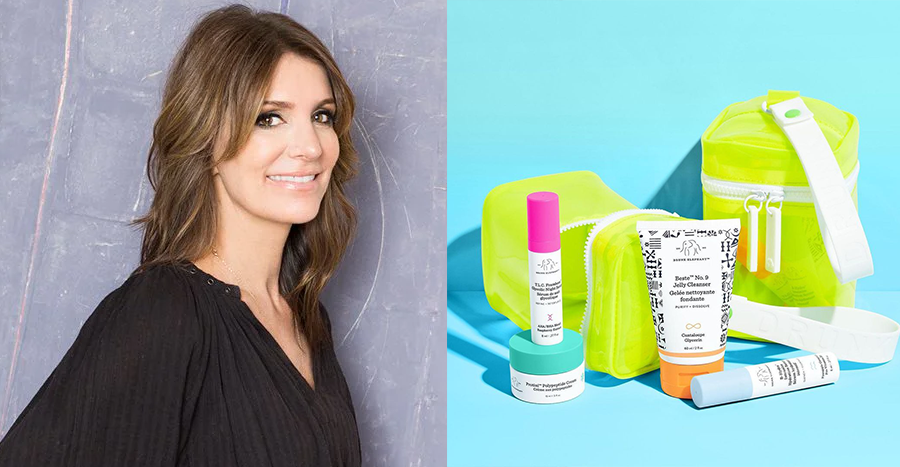
Image Courtesy: Beauty Magazine of Malaysia
Drunk Elephant’s founder, Tiffany Masterson, did not position herself as a beauty expert. She positioned herself as a protector.
Her authority emerged from her own adverse skin reactions — from harm experienced, not beauty desired. That origin story matters.
This wasn’t aspiration.
It was defense.
From the beginning, Drunk Elephant framed skincare as a space contaminated by hidden dangers. The brand’s credibility came from identifying threats, naming enemies, and offering clear boundaries.
Masterson didn’t promise transformation.
She promised safety through removal.
The “Suspicious 6”: Fear Given Structure
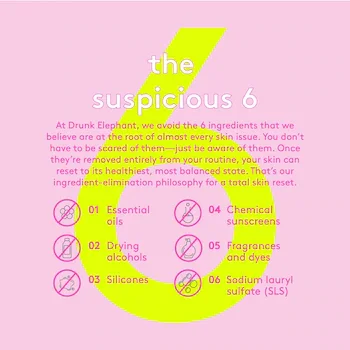
Image Courtesy: Sephora
Drunk Elephant’s most powerful branding device was not formulation — it was categorization.
By naming the “Suspicious 6,” the brand gave consumers something rare:
a finite list of things to avoid.
Psychologically, this is crucial.
Anxiety decreases not when risk disappears, but when it becomes enumerable. The “Suspicious 6” transformed an overwhelming ingredient landscape into a navigable system.
Fear became legible.
Choice became competence.
Drunk Elephant didn’t just offer products — it offered instructional clarity.
Mixing Culture and the Illusion of Mastery
Drunk Elephant’s encouragement to mix products wasn’t about creativity. It was about ownership.
Mixing allowed consumers to feel:
informed
in control
actively protective
This taps into a deeper behavioral truth: agency reduces fear more effectively than reassurance.
Where brands like Tatcha ask consumers to trust sequence and ritual, Drunk Elephant asks them to assemble safety themselves.
The consumer becomes the system.
That feels empowering — and burdensome — at the same time.
Design as Alarm System
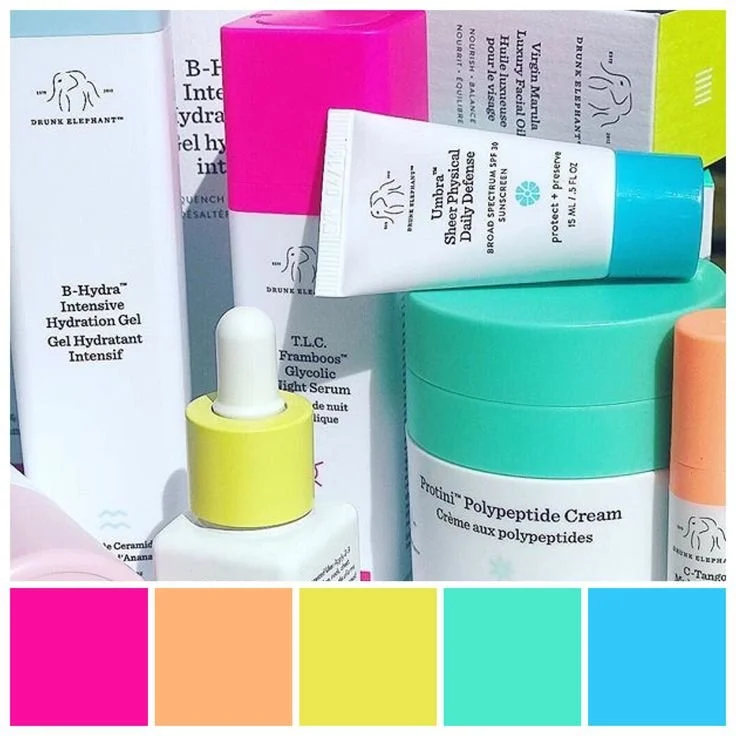
Image Courtesy: Pinterest
Drunk Elephant’s packaging is loud, graphic, and unambiguous.
Bright colors. Bold typography. Clear differentiation.
This is not playful whimsy. It is alert design.
In cognitive psychology, high-contrast visuals signal importance and urgency. Drunk Elephant’s aesthetic reinforces attentiveness rather than relaxation.
The shelf presence says:
Pay attention.
Read closely.
Act deliberately.
The design supports the brand’s core psychological posture: vigilance.
Clean Beauty’s Unspoken Cost
Drunk Elephant delivered relief — but not rest.
By training consumers to scrutinize ingredients constantly, the brand elevated competence while sustaining alertness. Anxiety was managed, not dissolved.
This is the unspoken tension at the heart of clean beauty:
When care is built on fear, the responsibility never fully lifts.
The brand succeeded because it contained uncertainty. It failed — intentionally — to remove it.
That tradeoff is why Drunk Elephant inspires loyalty and criticism in equal measure.
Strategic Takeaways for Brand Builders
Drunk Elephant reveals powerful, uncomfortable lessons:
Fear can be converted into agency
Boundaries create trust faster than reassurance
Education can soothe — or sustain anxiety
Control feels empowering, even when it’s heavy
Cleanliness is as psychological as it is chemical
Drunk Elephant didn’t calm the nervous system.
It taught it rules.
Conclusion: Control Is Comfort — Until It Isn’t
Drunk Elephant succeeded because it met consumers where they already were: alert, cautious, and distrustful.
It offered not serenity, but structure.
Not ritual, but rules.
Not surrender, but defense.
In contrast to brands like Tatcha — which cultivate trust through discipline and time — Drunk Elephant reflects a different belief about the body:
That it must be protected constantly.
This is not a failure.
It is a mirror.
And it reveals something essential about modern wellness culture:
When fear becomes the foundation of care, control becomes the product.
Essential Reads: Understanding Drunk Elephant’s Psychology
1. The Culture of Fear — Barry Glassner
Why: Explains how fear is socially constructed and sustained — central to Drunk Elephant’s context.
2. Risk Society — Ulrich Beck
Why: Frames modern life as dominated by risk management rather than trust.
3. Purity and Danger — Mary Douglas
Why: A foundational text on contamination, boundaries, and cleanliness as cultural systems.
4. Influence — Robert Cialdini
Why: Explains how clarity and authority drive compliance and trust.
5. Brand Seduction — Daryl Weber
Why: Illuminates how fear, reassurance, and control interact at a subconscious level.
