
Juni: Branding Calm in an Overstimulated World
A cultural case study in emotional regulation, softness, and modern wellness
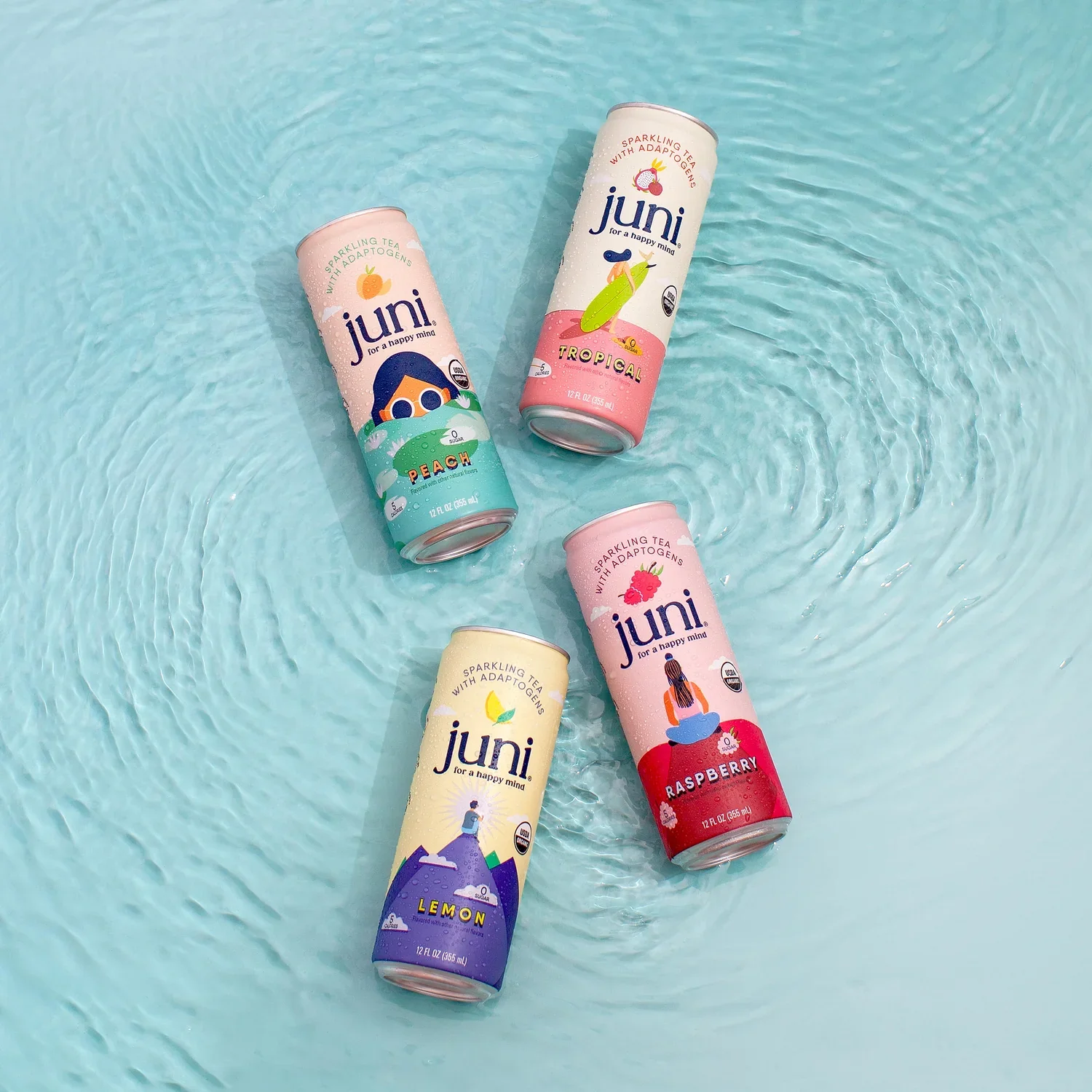
Image Courtesy: Drink Juni
Introduction: When Wellness Stopped Helping People Feel Better
Wellness, once positioned as relief, quietly became another form of exertion.
Morning routines grew longer. Supplement stacks expanded. Optimization replaced intuition. Even practices meant to soothe—meditation, breathwork, journaling—began to feel performative, tracked, and outcome-driven.
Juni entered this environment without urgency, explanation, or intensity.
It did not promise transformation.
It did not emphasize productivity, energy, or biohacking.
It did not frame calm as an achievement.
This Juni case study explores how the brand succeeded not by adding value in the traditional sense, but by subtracting stimulation—positioning itself as a companion to emotional regulation rather than a tool for self-improvement.
The Cultural Tension: A World That Forgot How to Slow
Modern wellness culture reflects a deep contradiction. It claims to support balance while rewarding constant improvement. Calm is encouraged, but only if it leads to better output.
Anthropologically, this creates fatigue at the nervous-system level.
Juni’s brand strategy responds to this tension not with rebellion, but with refusal. It opts out of urgency. It declines the demand to quantify feeling states. Instead of asking consumers what they want to achieve, it asks—implicitly—how they want to feel.
This reframing is subtle, but powerful. Juni positions calm not as a break from normal life, but as a viable way to inhabit it.
Founder Presence as Nervous-System Cue

Image Courtsey: Drink Juni
Juni’s founders, Radhi Devlukia and Jay Shetty, are often discussed in terms of visibility. But for Juni, presence matters more than reach.
Radhi Devlukia’s public demeanor is not aspirational in the conventional sense. It is grounded, slow, and non-performative. She does not speak at an audience; she settles into one.
Psychologically, this functions as co-regulation. Humans instinctively attune to calm states in others. Juni’s brand leadership models regulation rather than instruction, allowing the brand to feel safe rather than persuasive.
This is not influence through authority.
It is reassurance through presence.
The Product as a Pause, Not a Promise
Juni’s adaptogenic beverages are not positioned as solutions. They are positioned as moments.
There is no language of “fixing,” “boosting,” or “optimizing.” The drinks are framed as gentle support—something you turn to, not something that acts upon you.
From a behavioral perspective, this distinction matters. Products that promise results introduce pressure. Products that support states invite softness.
Juni’s beverage branding understands that calm cannot be pursued aggressively. It must be allowed. The product becomes an environmental cue—a signal to slow—rather than a functional demand.
Design as Regulation, Not Aesthetic
Juni’s visual language is deliberately restrained.
Neutral tones, soft textures, generous negative space, and unhurried layouts create what psychologists describe as low-arousal environments. There is no visual urgency. No call to action. No emphasis on novelty.
Anthropologically, this matters because design regulates before cognition. Juni’s branding communicates safety before comprehension.
Unlike wellness brands that aestheticize spirituality or dramatize mindfulness, Juni keeps design gentle and unassuming. It does not ask to be admired. It asks to be felt.

Image Courtesy: Drink Juni
Language as Emotional Instruction
Juni’s copy is slow by design.
Sentences are short. Claims are modest. There is an absence of hype-based verbs. This linguistic restraint mirrors its psychological intent: to lower internal noise, not add to it.
In nervous system branding, language functions as a pacing mechanism. Juni’s language gives permission to pause mid-thought. It does not rush the reader toward insight or action.
This is a quiet but disciplined choice—and one that reinforces the brand’s credibility. Calm here is not ornamental. It is structural.
Why Juni Chose Soft Power Over Scale Energy
Juni does not compete for dominance. It does not attempt to become ubiquitous, urgent, or loud. This is not a limitation—it is strategic clarity.
By refusing overstimulation, Juni protects its emotional contract with the consumer. The brand understands that calm cannot be mass-performed without losing integrity.
Where many wellness brands chase visibility, Juni protects tone. Where others build momentum, Juni builds trust.
This strategic restraint positions Juni less as a product brand and more as an emotional orientation.
Strategic Takeaways for Brand Builders
Juni’s marketing strategy offers a rare set of lessons:
Calm can be a credible position, not a passive one
Emotional regulation is emerging as a core consumer need
Founder presence can model behavior rather than instruct it
Design and language can function as nervous-system cues
Subtraction can be more differentiating than addition
Juni wins by refusing to compete on volume, intensity, or promise.
Conclusion: Calm as a Source of Authority
Juni reveals an important shift in modern branding.
As consumers grow overstimulated and distrustful of optimization narratives, authority is quietly moving toward brands that make people feel settled rather than activated.
Juni does not tell people how to live better lives.
It creates space for people to feel better inside the lives they already have.
In the next era of wellness, power will not belong to the most stimulating brands—but to the ones that know when to be still.
Top 5 Essential Reads to Deepen This Juni Case Study
1. Primal Branding — Patrick Hanlon
Why: Juni is a textbook example of belief-based branding without aggression. Its rituals (slow sipping, intentional pauses), icons (muted palettes, minimal cues), and creed (calm over control) demonstrate how brands can create stickiness through shared meaning rather than dominance.
2. How Brands Grow — Byron Sharp
Why: At first glance, Juni appears too niche, too intentional, too soft to fit Sharp’s model. That’s exactly why the book is relevant. Juni’s calm aesthetic, consistent tone, and repetitive emotional signal build mental availability—not through volume, but through recognizability. This helps explain how a brand that avoids urgency can still occupy space in memory and routine. This is not about mass persuasion. It’s about quiet salience.
3. Start With Why — Simon Sinek
Why: Juni’s “why” is not a mission statement—it’s an emotional orientation. Radhi and Jay’s emphasis on intentional living, presence, and self-connection is embedded across product, language, pacing, and design. Sinek’s framework helps articulate how Juni maintains internal coherence. Consumers feel alignment not because they are told the “why,” but because every touchpoint behaves as if it already believes it.
Why it matters for a brand that doesn’t chase virality: Juni doesn’t spread by being exciting. It spreads by being emotionally resonant. Berger’s work on social currency and emotion explains why calm, when rare, becomes shareable. Juni gives people something different to signal—not energy or success, but regulation and thoughtfulness. The book helps decode how Juni turns non-performance into a form of cultural signaling.
5. Brand Seduction — Daryl Weber
Why this is especially important for Juni: Weber’s exploration of subconscious branding and neuroscience is crucial for understanding Juni’s design and tone. Juni persuades below the level of words—through softness, pacing, and visual safety. This book explains how certain cues bypass rational evaluation entirely and act directly on emotion and instinct. Juni’s success isn’t driven by claims—it’s driven by felt response.
