
Poppi: The Functional Soda That Made Wellness Feel Light Again
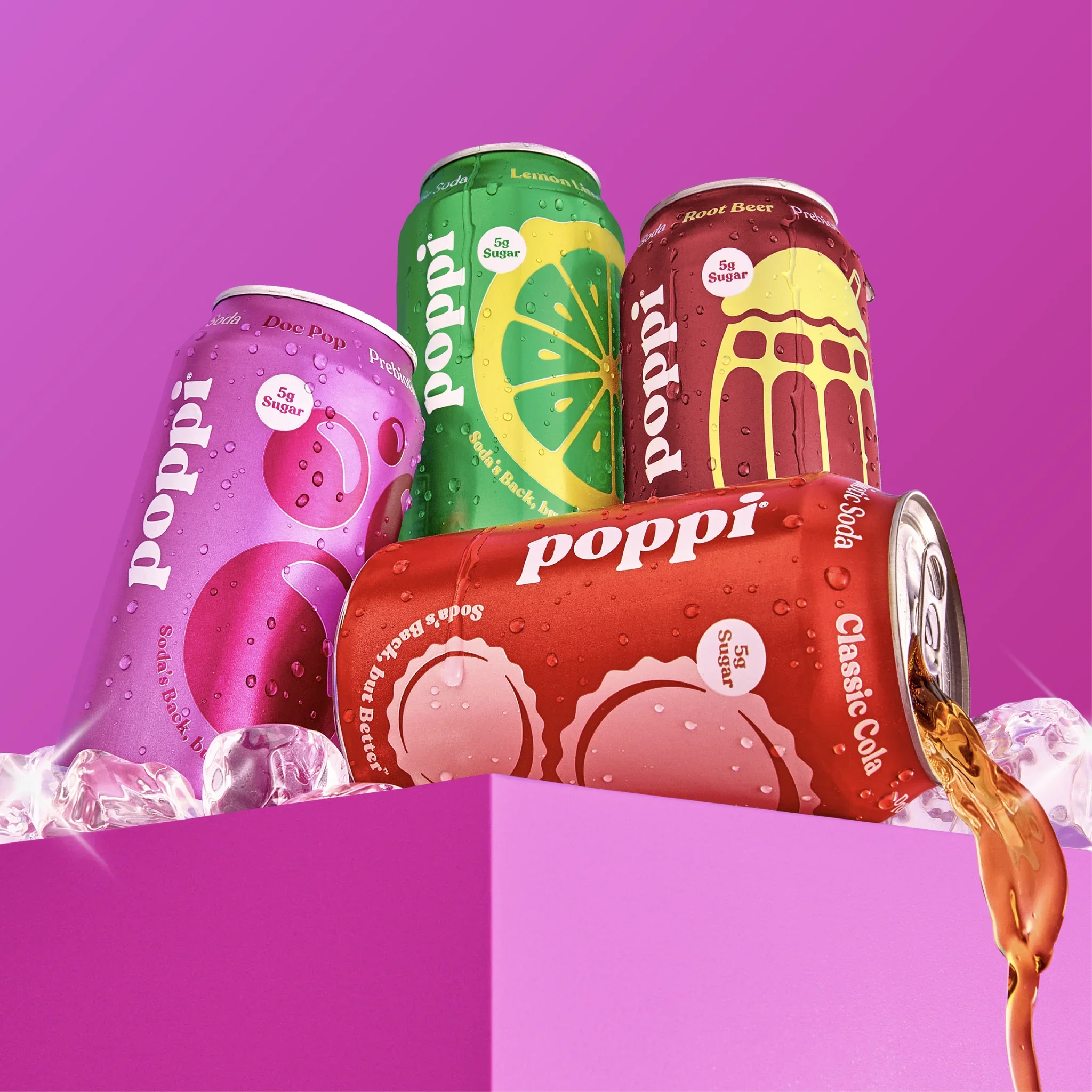
Image Courtesy: Poppi
A cultural case study in emotional branding and consumer psychology
Introduction: When Wellness Became Heavy
At some point, wellness stopped feeling like care and started feeling like work.
Rules multiplied. Ingredient scrutiny intensified. Even pleasure came with a moral tax.
Poppi emerged not as a solution to a nutritional problem, but as a response to an emotional one.
This Poppi case study explores how a functional soda brand won cultural relevance by reducing the weight attached to health choices—weight that had quietly accumulated through years of optimization-driven wellness marketing. Rather than asking consumers to do better, Poppi made it easier to feel okay.
The result was not just adoption, but affection.
Category Reframe: From Moralized Soda to Everyday Balance
In the cultural imagination, soda had become symbolic—linked to excess, irresponsibility, and regret. Health beverages, meanwhile, were coded as serious, corrective, and quietly judgmental.
Poppi’s brand strategy didn’t argue with either side. It dissolved the tension.
By positioning itself as a functional soda—lightly carbonated, low-sugar, prebiotic-supported—Poppi reframed the category from “good vs. bad” into livable vs. untenable. The brand didn’t seek superiority in formulation so much as compatibility with daily life.
Anthropologically, this matters because cultures adopt what feels sustainable. Brands that survive do not demand moral perfection; they minimize moral load. In that sense, Poppi’s marketing strategy succeeded by asking for less—less discipline, less justification, less self-surveillance.
Poppi didn’t cleanse soda of guilt. It made guilt irrelevant.
Origin as Cultural Alignment (Not Innovation Theater)
The Poppi origin story—often cited from its Shark Tank chapter—matters not because it’s dramatic, but because it is recognizable. Founder Allison Ellsworth’s digestive issues and early experimentation with apple cider vinegar mirror a widely shared wellness impulse: self-experimentation born from frustration with extremes.

Founder Allison Ellsworth. Image Courtesy: Fortune
The early brand (“Mother Beverage”) foregrounded function and heritage. The rebrand to “Poppi” marked a cultural shift—from explanation to expression. This wasn’t cosmetic. It signaled an understanding that, by the time Poppi scaled, consumers no longer needed proof that gut health mattered. They needed permission to stop trying so hard.
Here, origin served as alignment, not spectacle. The story validated Poppi as a response to the moment it entered—not as a category disruptor, but as a cultural companion.
The Psychology of Lightness: Why Adoption Felt Effortless
Poppi’s rise in prebiotic soda marketing can be understood through a small set of powerful psychological mechanisms—quietly orchestrated.
Emotional Lightness (Cognitive Load Reduction)
Poppi minimized decision fatigue. Simple claims, approachable flavors, and cheerful design reduced the mental work required to choose “well.”
Habit Substitution
Rather than asking consumers to abandon soda rituals, Poppi preserved them. Behavioral science consistently shows replacement outperforms elimination when habits are emotionally encoded.
Health Halo Without Intimidation
“Prebiotics” communicated benefit without demanding expertise. This kept credibility high while friction stayed low—an ideal balance in wellness beverage branding.
Identity Soft-Signaling
Poppi functioned as a socially fluent object. Being seen with it suggested alignment with modern wellness without broadcasting intensity or dogma.
Together, these elements explain why Poppi spread through kitchens, offices, fridges, and social feeds—not through persuasion, but normalization.
Design as Cultural Language (Not Decoration)
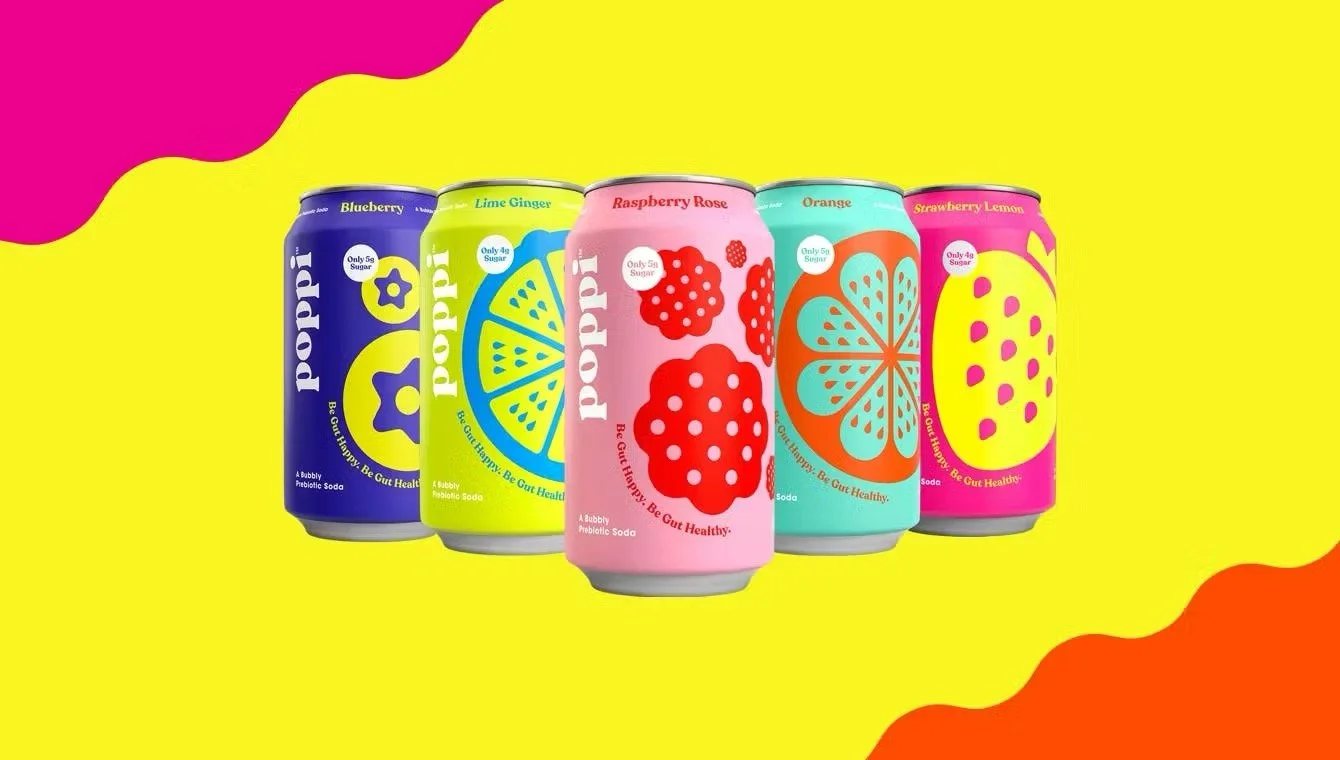
Image Courtesy: DIELINE
Poppi’s soda branding did much of the work before language ever appeared.
Bright, saturated colors; flat graphic forms; friendly typography—these choices communicated mood first, meaning second. In contrast to austere health aesthetics, Poppi’s look signaled approachability. It felt low-stakes.
Anthropologically, color operates as a pre-verbal signal. Here, it told consumers what Poppi wouldn’t be: strict, punishing, self-serious. The popularity of Poppi in “fridge restock” content wasn’t accidental. The product performed visually—turning storage into display and consumption into a social cue.
Design didn’t amplify function. It translated values.
Virality Through Belonging, Not Hype
Poppi’s inclusion among viral wellness brands wasn’t driven by spectacle. It was driven by visibility within ordinary life. Influencer presence felt embedded rather than imposed, aligning with social identity theory: people adopt what they see reflected in groups they recognize.
Poppi didn’t ask to be shared. It made sharing feel natural.
That distinction matters. Brands that over-perform theatrically often peak fast. Brands that blend into identity systems compound.
Strategic Takeaways for Brand Builders
This Poppi marketing strategy offers several enduring lessons:
Cultural relief outperforms functional supremacy in moralized categories
Subtraction (less pressure) can create more value than addition
Habit preservation beats behavior correction
Visual language should express emotional posture, not just differentiation
Adoption accelerates when brands lower psychological cost
Poppi’s success wasn’t built on telling people what to do. It was built on making their choices feel lighter.
Conclusion: What Poppi Reveals About the Next Era of Wellness
Poppi is not a rejection of health culture. It is a recalibration of it.
As wellness matures, brands that thrive will trade commandments for companionship. They will offer balance instead of benchmarks. They will recognize that consistency is emotional before it is rational.
In that future, the most powerful brands won’t promise transformation.
They will promise continuity—without the weight.
That is Poppi’s quiet achievement.
Top 5 Essential Reads to Deepen This Poppi Case Study
1. Alchemy — Rory Sutherland
Why it matters: Poppi’s success is a lesson in reframing perception rather than optimizing product—a core tenet of behavioral economics.
2. The Experience Economy — Pine & Gilmore
Why it matters: Poppi transforms a beverage into a mood. This lens explains why experiential value now drives differentiation in commoditized categories.
3. Consumed — Benjamin R. Barber
Why it matters: Barber’s critique of pleasure wrapped in responsibility offers a powerful frame for understanding Poppi’s cultural appeal.
4. The Paradox of Choice — Barry Schwartz
Why it matters: Poppi reduces decision fatigue—an underappreciated driver of adoption in crowded wellness spaces.
5. Primal Branding — Patrick Hanlon
Why it matters: Poppi’s creation story, visual icons, and everyday rituals quietly build belief and belonging over time.
